Mothers of the Deep
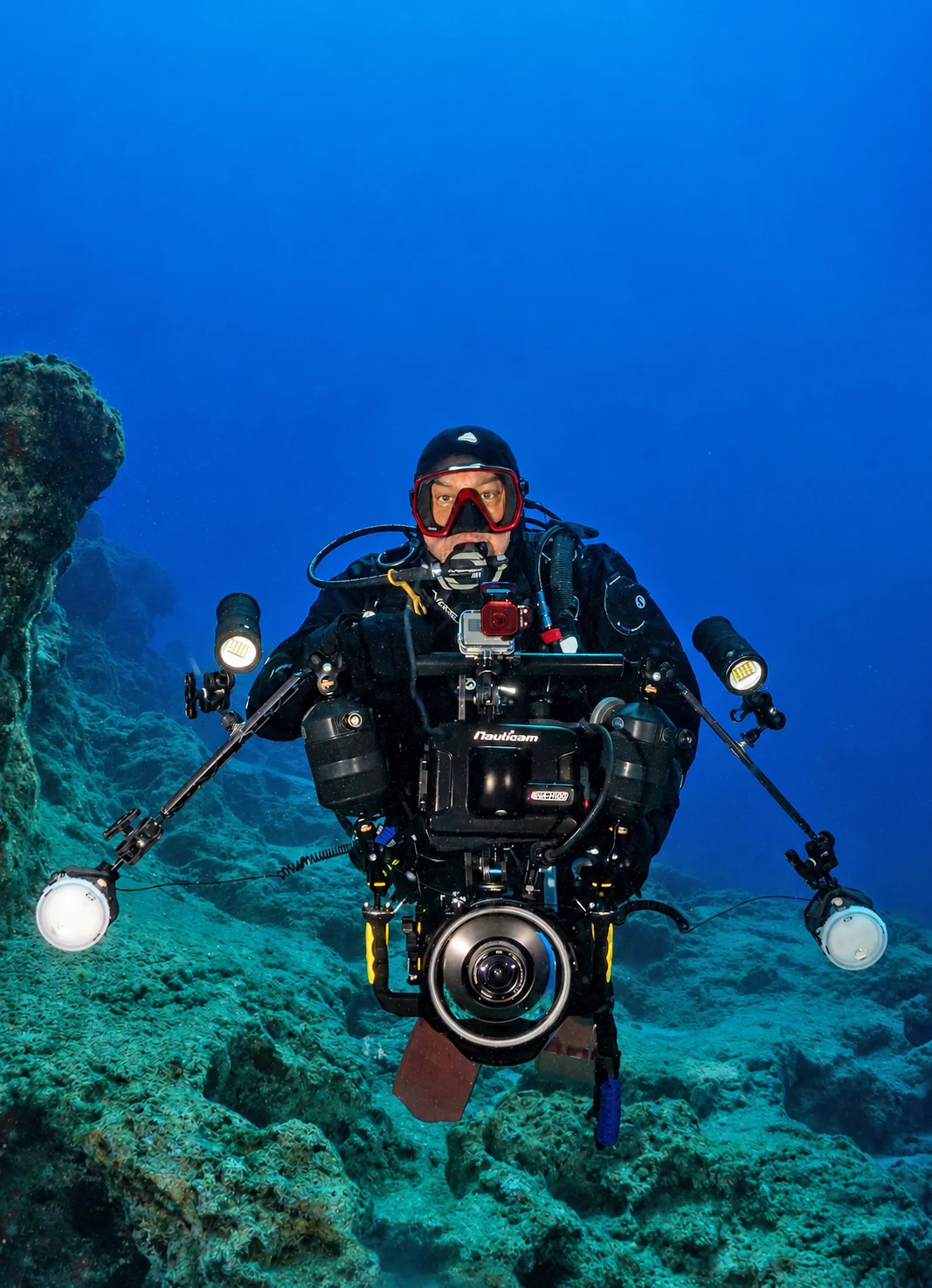
Text and photographs: Tahsin Ceylan
From the Naviga archive, May 2017. The text reflects the account and observations of the period in which it was first published.
The continuity of life depends on reproduction in the marine ecosystem just as it does on land. In this process the devoted mothers of the sea will give up even their own lives to keep their young clean, to raise them, or simply to bring them into the world. And what might humankind give up so that these species do not disappear? In most marine fish the eggs contain an oil droplet and float in the pelagic zone; in only a few are the eggs fixed to a surface. Coral eggs drift, while cephalopods prefer to fasten theirs to a suitable surface with a fluid. Some particular species, such as the cardinalfish, carry their eggs in their mouths.
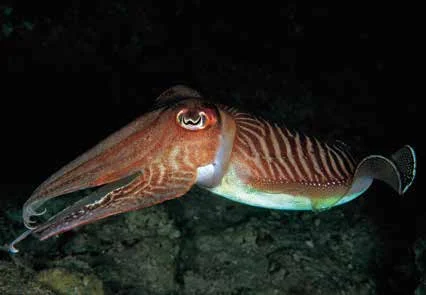
Sea turtles, on the other hand, never see their young. It is also known that some males prepare the ground for females. Cuttlefish and squid are reported to lay their eggs inside gelatinous cords 60 to 160 millimetres long, with an average of 90 eggs per cord and some 60 cords produced by a single female. On these figures a single female lays roughly 6,000 eggs. Boletzky (1974) stated that the larvae become free-swimming within 40 to 45 days after spawning at 12–14 °C. We have observation records of this species in all our seas except the Black Sea.
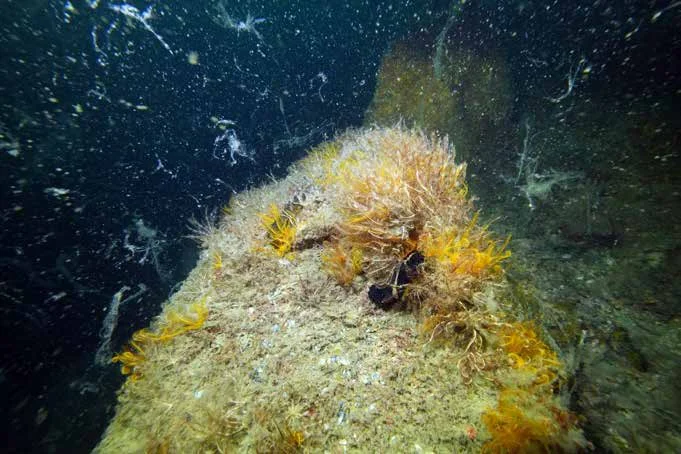
They tend to fasten their eggs to protruding surfaces on wrecks or coastal spurs where they can make use of the current.
The sacrifice of the mother octopus
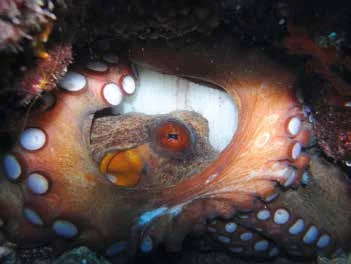
Octopuses (Octopus vulgaris) mate only once in their lives. The shy male blushes and changes colour when he touches the female. The female arranges the fertilised eggs in clusters. Of the 150 to 200 eggs in each cluster, only a few will ever become adult octopuses. Holding the eggs gently with the thin membranes on her arms, the female keeps them clean while creating a current with her siphon to supply her young with oxygen. With her deeply developed sense of motherhood and sacrifice, the octopus stops eating once she has laid her eggs and waits five months for her young to hatch.
At the end of this sacrifice, as her young say hello to life, she bids it farewell. Octopuses — whose Hawaiian name means "gliding ghost" — have the most advanced nervous system in the cephalopod family. Most marine scientists describe the octopus as the most intelligent invertebrate on earth. Some even say their intelligence matches that of a domestic cat. The marine scientist Neil McDaniel says of them: "There is a look full of meaning in their eyes, as though they know us."
From Keldağ to Saros, on every dive, these endearing and intelligent creatures have accompanied us — timid yet waiting to be noticed, as if to say "see me", meeting us with warm eyes and frankly posing for the camera. Greetings to them from the soul of the sea. (www.tahsinceylan.com/makaleler)
Small-spotted catshark
The small-spotted catshark (Scyliorhinus canicula) is an oviparous species. It usually fastens its eggs to sponges with long arms. Coming across this is close to impossible, but an invitation from Karaburun was enough to make it possible. The catshark lives in warm and temperate seas at depths from 3 to 1,000 metres without migrating far. It feeds on crustaceans, invertebrates and fish. Its average length is 80 to 150 centimetres. It reproduces by mating and laying eggs, as birds do. In spring it leaves its eggs in a case among the rocks. It may spawn several times in a season. Incubation takes 15 days.
In eggs laid on an Axinella sponge, we are able to film the young inside.
Tentacled blenny (Parablennius tentacularis)
I recorded my first footage of a blenny laying its eggs inside an oyster shell and never leaving their side in Sinop, in the years before we moved to digital. The anxious bustle of the blenny trying to protect its eggs from predators was the first entry in my archive of the sea's mothers. Years later, in Gölcük/Değirmendere, I filmed a blenny that had cleaned out the empty shell of a rapa whelk, made a nest of its interior and laid its eggs there. Raising awareness of this among divers matters a great deal. The more we introduce people to the mothers of the sea, the easier it becomes to help protect them.
Grey triggerfish (Balistes capriscus)
The triggerfish, which we encounter in almost every sea in the world, digs a pit at depths of 0 to 30 metres and places its eggs inside. It has also been seen using crevices in rocks or wrecks. Constantly aerating its eggs with its pectoral fins and guarding them against predators, the triggerfish is frequently observed attacking approaching divers as well. It is common to see footage of a triggerfish tugging at fins, picking up with its mouth a camera left near its nest and carrying it away, and ceaselessly fanning its eggs. Out of respect for the mothers of the sea, we advise divers to stay well away from such scenes.
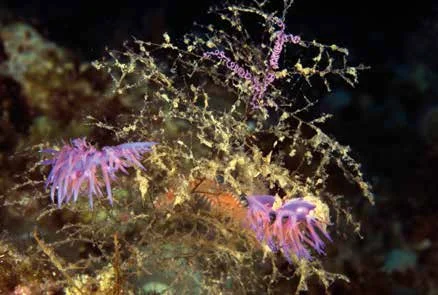
After all, using its fins to push away a single grain of sand stirred up by your fins means a great deal of time and effort for a fish. Sea hares are gastropods and are not able to travel very long distances. For this reason they tend to live where their food is. Flabellina affinis lives on hydroids — themselves a venomous group in the animal kingdom — and lays its eggs in the same place.
European eel (Anguilla anguilla)
Its life cycle is so remarkable that a great many scientists are still working to unravel its secrets. I filmed it for the first time at Kadın Azmağı in Gökova. The word "respect" is not enough to describe what I felt in the face of what they do in order to reproduce. For eels in Europe and the Americas, the spawning ground is the Sargasso Sea, between Bermuda and the Antilles. Far from the European and North American continents, the eels lay their eggs in this region in March and April at depths of roughly 300 to 500 metres.
The larvae that hatch in early spring resemble a bay leaf, which is why they are called leptocephalus larvae. These larvae migrate on the Gulf Stream — the warm current that begins in the Gulf of Mexico and reaches the coasts of Western Europe — all the way to European shores. The smallest larvae found so far measure 7 millimetres and are encountered at depths of 75 to 300 metres. By the time they reach European coasts they have grown to 75 millimetres. The distance they cover along the way is some 5,000 kilometres (1,000 kilometres for the American eel).
Once these creatures reach the coast, they begin to change from a bay-leaf shape into something resembling an eel. Their body size and weight decrease. The teeth in their mouths used for catching plankton disappear, and this process is called metamorphosis. Beginning their lives at sea, these creatures live planktonically at first, their movement dependent on the currents. At this stage they are carnivorous, feeding on microscopic animals (zooplankton). These tiny young are found at depths of 300 to 600 metres by day and closer to the surface, between 35 and 130 metres, by night.
The second migration
This is the eels' migration back to their birthplace to reproduce. When silver eels leave fresh water and enter the sea in autumn, they have not yet fully reached sexual maturity. On this long and dangerous journey of some 18 months there is a single aim: to reach the place they were born and reproduce. Little is known of the silver eel's life at sea. In specimens caught at river mouths before entering the sea, the digestive organs are known to have ceased functioning. This shows that eels do not feed at all until they reach the spawning grounds in the Sargasso Sea and become fully mature.
The sea at the spawning ground is 4,000 to 5,000 metres deep. Eel larvae, however, are caught at 400 to 500 metres, at the limit of where sunlight reaches. Eels are thought to die after spawning, because neither living nor dead adults are found in the breeding region.
Mediterranean monk seal (Monachus monachus)
The Mediterranean monk seal, whose Latin name means "monk" or "solitary", is among the largest members of the seal family. They range from 2 to 4 metres in length and can weigh up to 400 kilograms. Their full lifespan is not precisely known, but individuals over 40 years old have been recorded. The Mediterranean monk seal is a marine mammal. It obtains its food from the sea and mates at sea, but it needs land to give birth, rest, sleep, raise its young and bask in the sun. For this reason the species is distributed along coastal areas. The single greatest reason it is under threat is that those coastlines have been overrun by humankind.
As a result of this growing encroachment, seals today choose caves people cannot reach as their habitat. If we also consider how rapidly we are becoming ecologically impoverished, dwindling food in the seas makes it harder for seals to find an easy meal. Not finding enough food is another threat. I was present during the process of releasing two pups back into the wild after rehabilitation, having lost their mother. The species is critically endangered.
Seahorses (Hippocampus guttulatus)
Male seahorses have a brood pouch in which they can keep the eggs they receive from the female. The female deposits her embryos inside the male's pouch. The male then nourishes them with a placenta-like fluid inside the pouch until they develop into tiny seahorses, supplying the eggs with oxygen through the capillaries in the pouch's inner tissue. The male's pregnancy lasts roughly 10 to 42 days. Throughout this time the female visits her mate every morning. These visits and greeting rituals give the female a sense of when her mate will give birth, and during this period she prepares to spawn again.
There are as yet no records of this in the wild, but there are records from laboratory conditions.